Why San Diego UV Is Among the Harshest in the Country
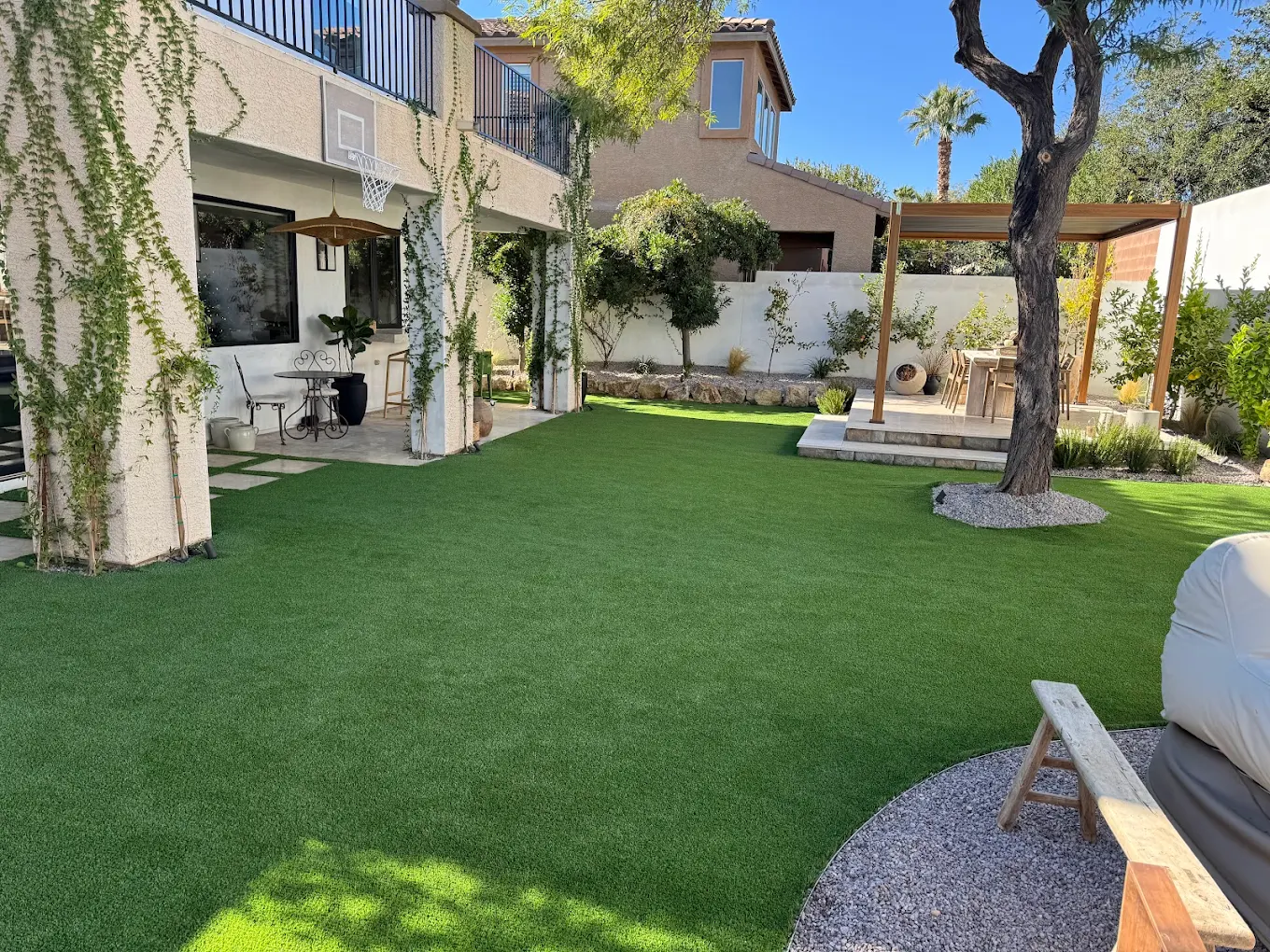
San Diego consistently records UV index readings of 10 or higher from May through September, with peak values reaching 11 to 12 during the summer solstice. This extreme ultraviolet exposure is driven by the city's southern latitude of roughly 2,000 feet, low humidity averaging around 20 percent, and nearly 300 days of sunshine per year. For homeowners across Carlsbad, La Jolla, and Mission Valley, these conditions mean their artificial turf absorbs significantly more UV radiation than installations in coastal or northern cities.
The intensity of UV radiation in the Southern California coast accelerates photodegradation in synthetic materials at a rate that surprises many homeowners. Turf fibers made from polyethylene and polypropylene are particularly susceptible to molecular breakdown when bombarded by UV-B and UV-C wavelengths over extended periods. While most quality turf products include UV stabilizers, the sheer volume of radiation in San Diego tests those protections to their limits, especially on south-facing yards in neighborhoods like Pacific Beach and Rancho Bernardo.
Compared to a city like Seattle, which averages a UV index of 3 to 4, San Diego turf receives roughly three times the UV exposure over the course of a year. This means a turf installation in Chula Vista or Encinitas will experience the equivalent UV dosage in 5 years that a Pacific Northwest lawn would see in 15 years. Understanding this disparity is essential when choosing turf products and planning maintenance schedules.
Signs of UV Damage on Artificial Turf
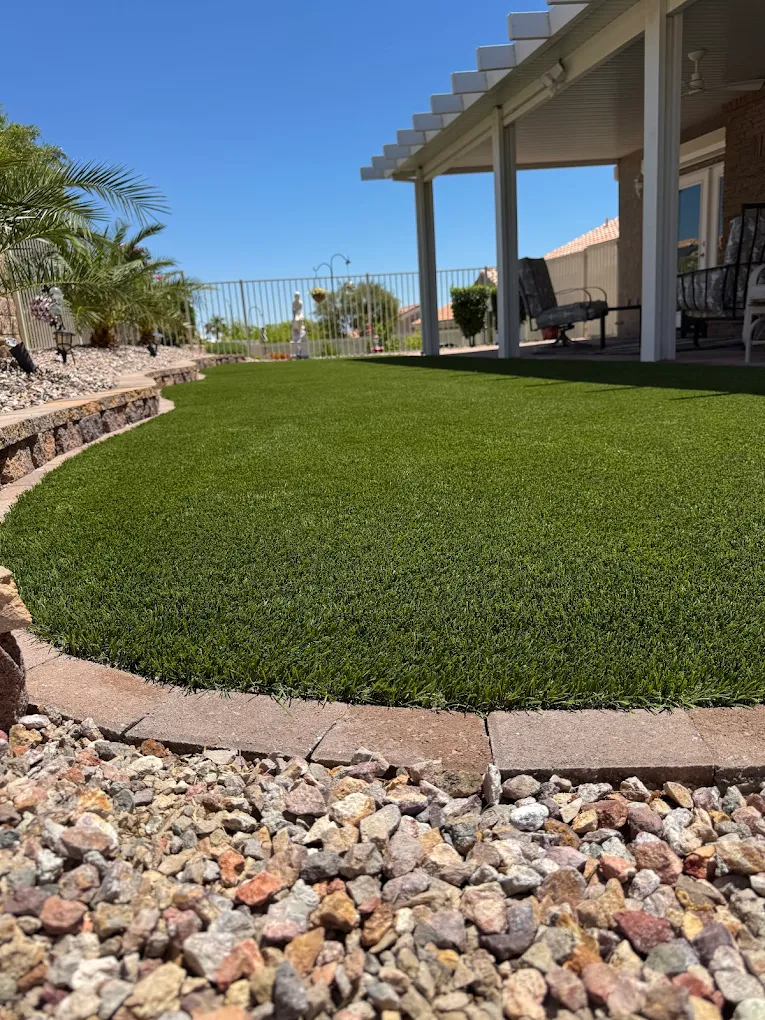
The earliest sign of UV degradation is a subtle color shift, where vibrant greens begin fading toward a yellowish or grayish tone. This fading typically appears first in areas receiving the most direct sunlight, often the center of the yard away from shade structures or walls. Homeowners in Del Mar and Ramona frequently notice uneven fading patterns where sections shaded by palms or pergolas retain their original color while exposed zones have shifted noticeably.
Beyond color changes, UV damage weakens the structural integrity of individual turf fibers. You may notice fibers becoming brittle, splitting at the tips, or breaking off when brushed. In advanced stages, the turf backing material itself can degrade, leading to shrinkage at seams and edges. These structural issues accelerate wear patterns, especially in high-traffic areas of North County and La Jolla homes where children and pets use the turf daily.
- Gradual color fading from green toward yellow or gray tones
- Fiber tips splitting or developing a frayed, fuzzy appearance
- Increased brittleness where fibers snap rather than bend
- Backing material shrinking or pulling away from edges and seams
- Infill becoming visible as fibers lose their upright resilience
- Uneven wear patterns between shaded and sun-exposed sections
How UV Stabilizers Protect Your Turf
Quality artificial turf manufacturers incorporate UV stabilizers directly into the polymer blend during the extrusion process. These stabilizers, typically hindered amine light stabilizers (HALS) and benzotriazole-based UV absorbers, work by intercepting UV radiation before it can break the polymer chains in turf fibers. For San Diego installations, the concentration and type of UV stabilizer used is arguably the single most important factor in determining how long the turf will look good.
Not all UV stabilizer packages are created equal, and this is where budget turf products often cut corners. Premium turf rated for coastal climates typically includes a higher concentration of stabilizers and may use dual-layer protection systems. When shopping for turf in San Diego, look for products that specifically list their UV stabilizer rating, often expressed as hours of UV exposure resistance. For the Southern California coast, you want a minimum of 5,000 hours of tested UV resistance, though 8,000 or more hours is preferable for yards in Carlsbad and Encinitas that get all-day sun exposure.
Always ask your turf supplier for the specific UV stabilizer rating and testing standard used. Products tested to ASTM G154 or G155 standards provide the most reliable UV resistance data for coastal climates.
Need Professional Turf Cleaning?
Get a free, no-obligation quote for your San Diego property. Same-day service available.
How Regular Cleaning Reduces UV Damage
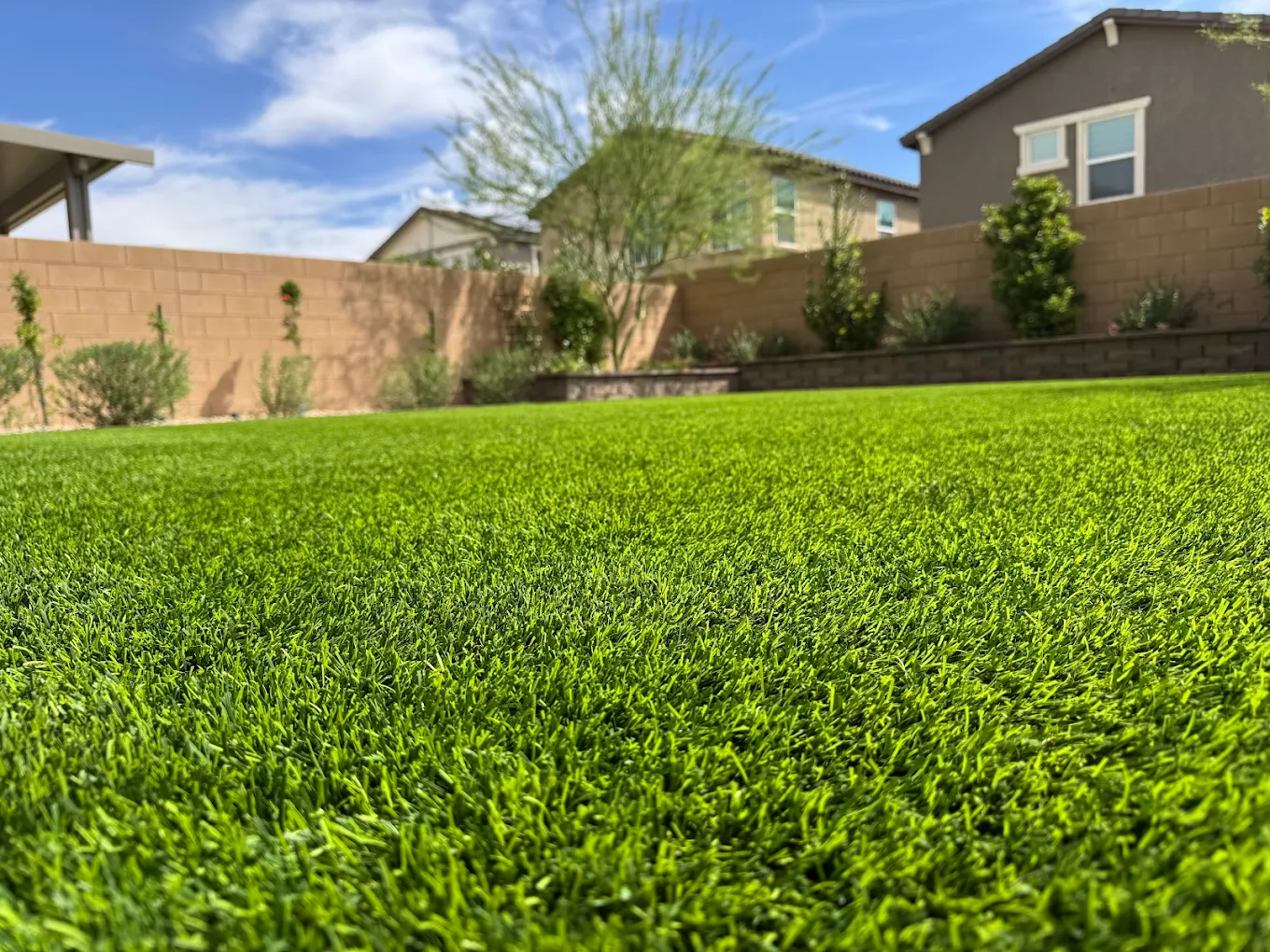
Keeping your artificial turf clean actually helps slow UV degradation, which surprises many San Diego homeowners. When dust, dirt, and debris accumulate on turf fibers, they create a layer that traps heat against the surface and can actually amplify UV damage through a process similar to how a magnifying glass concentrates sunlight. Regular cleaning removes these deposits and allows the turf's built-in UV stabilizers to function as designed without interference from surface contaminants.
Professional turf cleaning services use techniques specifically designed to preserve UV-protective coatings while removing harmful buildup. Harsh chemical cleaners or abrasive mechanical methods can strip away the UV stabilizer layer on turf fibers, accelerating the very damage you are trying to prevent. In neighborhoods like Chula Vista and Mission Valley, where many homes have mature landscaping that drops organic debris onto turf, maintaining a consistent cleaning schedule is especially important for long-term UV protection.
Rinsing your turf during the cooler parts of the day also helps manage UV-related heat stress. A quick hose-down in the early morning not only cools the surface but washes away the fine coastal dust that settled overnight. This simple habit takes just a few minutes but provides measurable benefits in preserving turf color and fiber integrity throughout the brutal San Diego summer.
Shade Solutions to Extend Turf Life
Strategic shade placement can dramatically reduce UV exposure and extend the life of your artificial turf by several years. Desert-adapted shade structures like pergolas, sail shades, and ramadas are popular across San Diego neighborhoods and serve the dual purpose of protecting turf while creating comfortable outdoor living spaces. Homeowners in Rancho Bernardo and Del Mar have found that covering even 30 to 40 percent of their turf area with shade structures noticeably slows fading in those zones.
Desert landscaping with strategically placed trees offers another natural shade solution. Species like mesquite, palo verde, and California pepper tree provide filtered shade without the heavy leaf drop that creates maintenance headaches on turf. The key is positioning trees on the south and west sides of turf areas where afternoon sun is most intense. Many La Jolla and Encinitas homeowners combine native trees with architectural shade elements for comprehensive UV protection that also enhances property value.
- Retractable shade sails that can be adjusted seasonally for optimal coverage
- Permanent pergolas with UV-filtering slats positioned over high-use areas
- Desert-adapted trees planted on south and west exposures for afternoon shade
- Patio covers extended to shelter adjacent turf sections from peak sun hours
Selecting the Most UV-Resistant Turf for San Diego
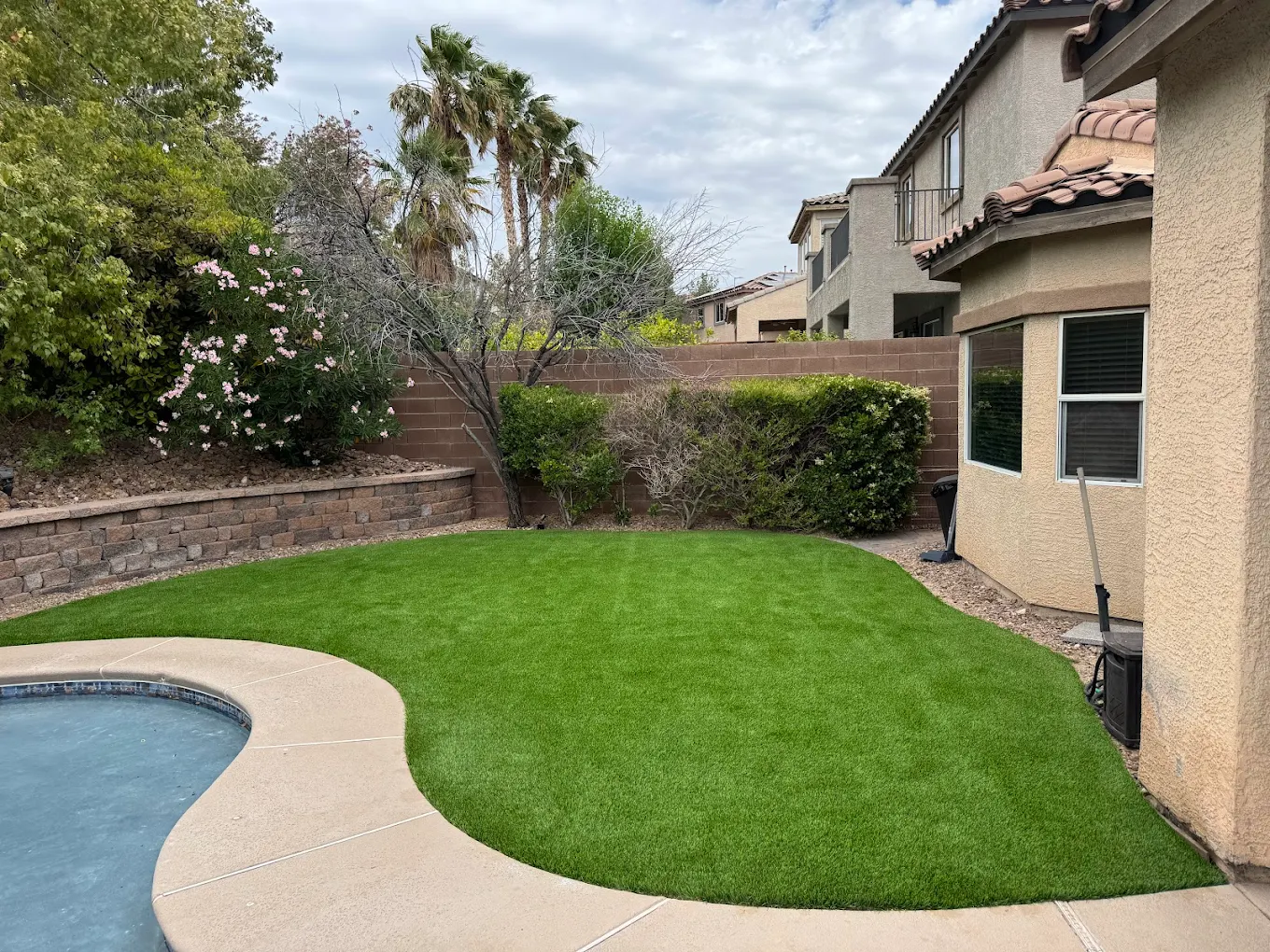
When investing in artificial turf for a San Diego property, UV resistance should be your top selection criterion, above pile height, color, or even price. Products specifically engineered for coastal markets use polyethylene fiber blends with enhanced UV stabilizer packages and higher denier counts that resist fiber splitting. Look for turf products that carry a premium-rated or extreme climate warranty, as these have been specifically tested under conditions similar to what your Carlsbad or North County yard will experience.
Darker turf colors absorb more UV radiation and heat, which can accelerate degradation in the San Diego climate. Many climate-savvy homeowners opt for turf blends that incorporate lighter green and olive tones along with tan thatch layers, as these color profiles absorb less radiation while still providing a natural appearance. A reputable local installer can show you samples that have been field-tested in San Diego County, which gives you far more reliable information than factory specifications alone.
Warranty terms reveal a lot about a manufacturer's confidence in their UV protection. For San Diego, avoid any product offering less than an 8-year UV warranty, and prioritize products with 10 to 15 year coverage. Be sure to read the fine print, as some warranties are prorated or exclude certain types of fading. A quality UV-resistant turf installed in Pacific Beach or Ramona should maintain at least 80 percent of its original color intensity through the first 8 years with proper maintenance.
The San Diego County Water Authority offers rebates for replacing natural grass with water-efficient landscaping, including artificial turf. Choosing a UV-resistant product helps ensure your investment outlasts the rebate payback period.